
WHAT SHOULD WE DO WHEN THE SALT ITSELF BEGINS TO ROT?
Our ancestors had a saying: “When meat goes bad, you salt it. But what do you do when the salt itself goes bad?” At first, it may sound like an ordinary saying from the kitchen. But if we think about it a little more deeply, we realize that it offers a powerful lesson about how societies and institutions fall into decline.
In the past even when I was a child we didn't have refrigerators. We used cupboards with wire mesh to keep food, lowered dishes into cool wells, and preserved meat with salt so it would last longer. When meat began to spoil, we salted it to slow down the process. Salt was something we relied on to preserve the meat. But what happens when the salt itself goes bad? What can we use to protect the meat then? That's where the real meaning of this saying lies.
In every society, there are people who do wrong, ignore the rules, or take advantage of others. This is nothing new. It has happened throughout history. What matters is having mechanisms in place to prevent such behavior and intervene when necessary. Law, justice, education, oversight, and ethical values exist for precisely this reason. In a sense, they are the salt that keeps society from spoiling.
For example, if a public employee abuses their position, someone must be responsible for supervising them. If a manager uses their authority for personal gain, they must be held accountable. If someone violates another person's rights, the law must step in. Nobody should believe they can get away with wrongdoing. Public trust can only be protected this way.
The real trouble begins when these very mechanisms stop doing their jobs.
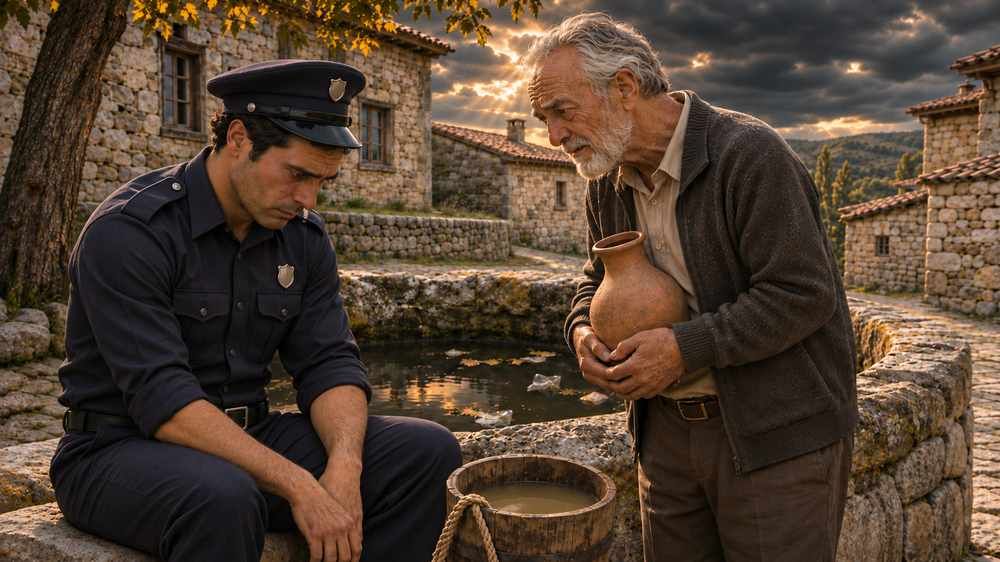
There was once a small village with a large well that supplied water to everyone. Wanting to keep the water clean, the villagers appointed a guard to watch over it. His job was to prevent people from throwing rubbish into the well and to make sure the water remained clean.
One day, a villager dumped rubbish beside the well. The guard saw him but said nothing. Another villager brought his animals to drink near the well and muddied the water. Again, the guard did nothing. Before long, everyone had started doing whatever they pleased around the well.
After some time, the villagers noticed that the water tasted different and had even begun to smell bad. They went to the guard and demanded an explanation.
“Weren't you appointed to protect this place? Why did you allow the well to become polluted?”
The guard tried to defend himself.
“I never wanted anyone to pollute the well. But I didn't want to get into arguments with people either. If I had interfered with everything everyone did, there would have been no peace in the village.”
An elderly villager then spoke up:
“Your job wasn't to get along with everyone. Your job was to keep the well clean. Instead of protecting it, you chose to stay on good terms with the people who were polluting it. Now we're all looking for clean water. But who is going to protect us?”
That day, the villagers understood an important truth:
“When those responsible for protecting something fail to do their job, it eventually becomes everyone's problem.”
The same is true of society. When those responsible for upholding justice become perpetrators of injustice, when those entrusted with protecting public resources use them for personal gain, or when managers choose people close to them instead of those who are qualified, something is seriously wrong. And when those who are supposed to oversee all this simply turn a blind eye, the situation becomes even harder to put right.
That is precisely what it means when the salt itself begins to rot.
Moreover, the people who undermine an institution are not always just those who do wrong. Those who see wrongdoing but remain silent, those who neglect their responsibilities, and those who look the other way to avoid disturbing their own comfort eventually become part of the problem.
Once trust disappears from a society, rebuilding it is never easy. Trust cannot be restored with pleasant words or promises. People want to see consistency between what their leaders say and what they actually do. They expect the rules to apply equally to everyone, without special treatment for anyone, regardless of their position or power. When they don't see this happening, their faith in justice gradually begins to fade.
There is something even worse: when wrongdoing gradually becomes accepted as normal.
Behaviors that once disturbed people eventually become ordinary. Remaining silent in the face of injustice starts to look like wisdom. Giving special privileges to certain people is seen as a sign of cleverness. Taking advantage of others becomes just another part of everyday life. Instead of standing up for what is right, people choose to side with the powerful. In this way, wrongdoing not only becomes more widespread; people also begin inventing excuses to justify it.
Yet a society does not need everyone to be perfect in order to survive. It needs people who do wrong to be challenged, those who suffer injustice to be able to defend their rights, and those who hold power to be held accountable when necessary. Isn't that what justice is fundamentally about?
Families and educators also have an important role to play here. We must teach children not only to succeed but also to be honest. We should help them understand the value of earning their way forward rather than simply getting ahead of others. If we measure a person's worth only by their position, wealth, or title, how can we ever teach them the importance of character and conscience?
Throughout my more than forty years in academic life, I have spent a great deal of time thinking about education and management. Over the years, one thing has become increasingly clear to me:
“We cannot measure the quality of an institution by the beauty of its buildings, the signs hanging on its walls, or the number of regulations it has. What really matters is how the people working there treat one another. Even the best regulations mean very little if the people responsible for implementing them lack a sense of conscience and responsibility.”
So, what should we do when the salt itself begins to rot?
First, we must acknowledge the smell. Silencing those who raise concerns, treating criticism as hostility, or covering up wrongdoing will solve nothing. On the contrary, these reactions only make problems worse. What we need to do is confront wrongdoing, ensure accountability, strengthen independent oversight, and make merit the fundamental criterion once again.
None of this will happen overnight. But change begins when we have the courage to call wrong what is wrong. Moreover, accountability should not be limited to those who commit wrongdoing. Those who allow it to spread by failing to fulfill their responsibilities must also be held accountable.
In my view, the greatest loss a society can suffer is not the spread of wrongdoing. It is when people no longer want to stand up for what is right. Because once those who defend justice and honesty fall silent, all that remains is the voice of people looking after their own interests.
In the end, the issue is not simply that the salt has gone bad. The real problem is that everyone notices the smell, yet nobody is willing to do anything about it. If people in a society want to drink clean water, those entrusted with protecting the well must do their jobs.
Let us not forget: when meat goes bad, you salt it. But when the salt itself goes bad, trying to save the meat is no longer enough. We must first restore the salt that is, rebuild justice, honesty, and trust in society. And to do that, we must hold accountable not only those who commit wrongdoing but also those who turn a blind eye to it.