
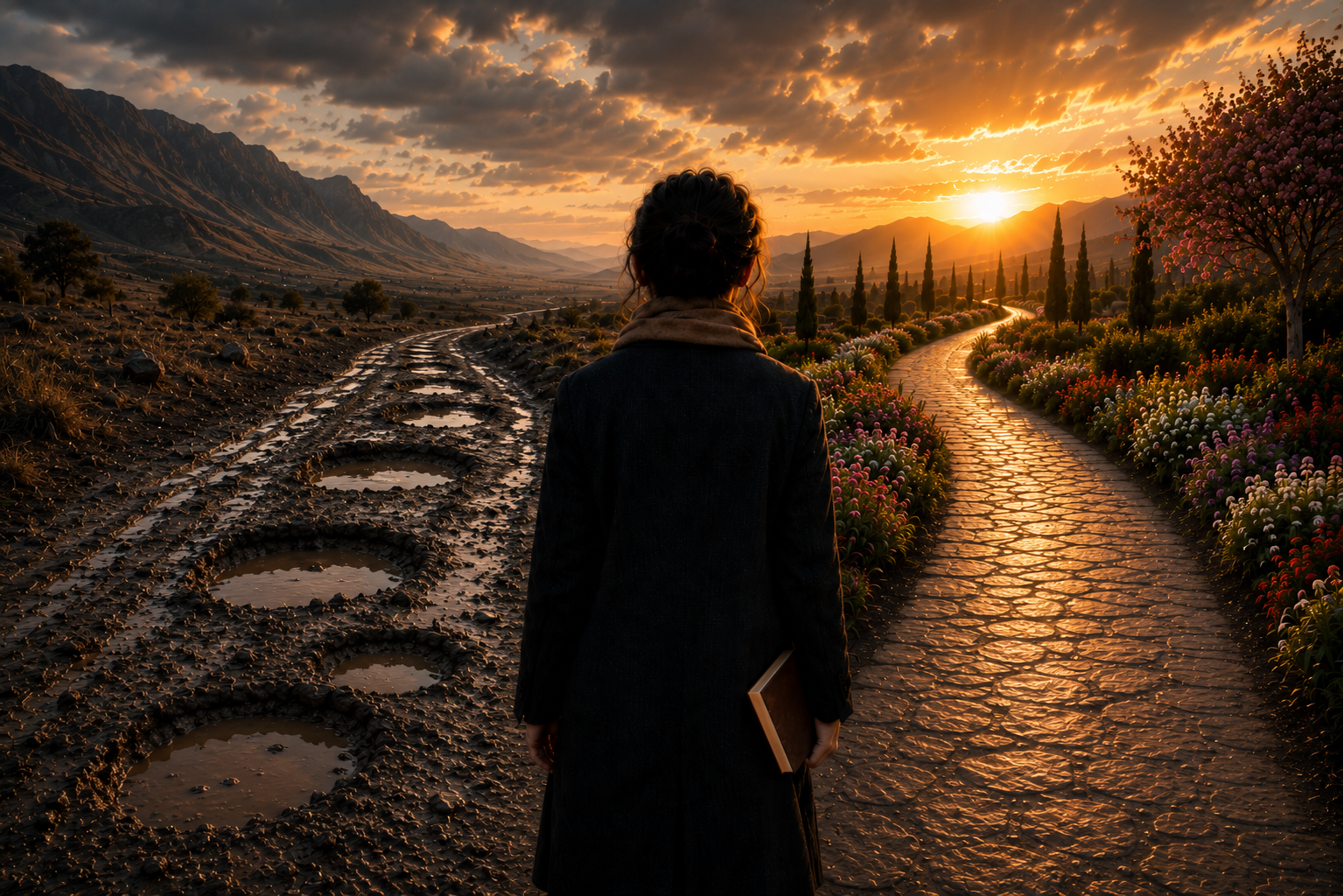
WRONG PEOPLE
In life, it is not the roads we travel or the turns we take that surprise us most. It is people. The people we approach with good intentions, the ones to whom we entrust a part of ourselves, the ones upon whom we place the weight of our trust.
Sometimes someone enters our life and settles into it as though they will always be there. They become part of our routines, our expectations, and our sense of certainty. Then, one day, they leave behind broken sentences, unfinished conversations, and unanswered questions. In those moments, we may find ourselves thinking, I wish I had never met them.
Yet it is often precisely in those moments that we learn something important, not only about others, but about ourselves.
It is tempting to view the appearance of the wrong people in our lives as simple misfortune. But that is only part of the story. Human beings discover themselves through relationships. We learn where we are strong, where we are vulnerable, what we can endure, and what we cannot, not in isolation but through our encounters with others.
Disappointment has a way of revealing truths that comfort rarely teaches. A betrayal may teach caution. A broken promise may teach discernment. A painful experience may remind us that trust is valuable precisely because it should not be given indiscriminately.
These lessons are rarely pleasant. In fact, they often arrive disguised as sorrow. Yet they quietly shape us.
A person who touches a flame does not learn to fear all fire. They simply learn which flames provide warmth and which ones burn. In much the same way, difficult relationships teach us not to close our hearts, but to open them more wisely.
This is how experience becomes wisdom.
Not every wound turns into wisdom immediately. Some hurts linger. Some disappointments take years to understand. Yet even the deepest scars can eventually reveal where our boundaries should stand and what we must never again allow to be taken from us.
Over time, anger softens into understanding, disappointment transforms into discernment, and painful memories become reference points that help guide future choices. What once felt like a setback gradually becomes part of our education.
Wrong people are often the harshest teachers.
They do not arrive carrying textbooks or offering gentle instruction. Their lessons come through mistakes, misunderstandings, betrayals, and departures. Yet the lessons remain. And when we are willing to reflect upon them, they become part of our growth.
The true value of suffering does not lie in the pain itself. Pain alone teaches nothing. What matters is the meaning we draw from it. Some people emerge from disappointment bitter and distrustful. Others emerge wiser and more self-aware. The difference is not in what happened to them, but in what they chose to learn from it.
Eventually, we come to understand that not everyone should be welcomed through the same door.
The unlimited trust of youth gradually gives way to healthy boundaries and selective trust. This is not a loss of innocence but a gain in wisdom. We become better able to protect ourselves, to recognize character, and to invest our time and energy where they are truly valued.
And perhaps that is one of life’s quiet paradoxes: it is often through the wrong people that we learn to recognize the right ones.
We learn who can walk beside us through difficult seasons. We learn with whom silence feels comfortable rather than awkward. We learn who celebrates our successes without envy and who remains present when circumstances become difficult.
These lessons cannot be learned from books alone. They require experience.
Wrong people do not merely take up space in our lives. Nor do they simply steal our time. If we are willing to learn from them, they help us understand for whom, and for what, the time we have left should be spent.
They leave.
But they leave something behind:
A consciousness a little wiser, a little stronger, and a little more discerning about whom to let in.