
WHO WILL CONTROL OUR DESIRES?
A Question That Begins with an Injection and Leads to Human Freedom
Throughout history, one of humanity’s most persistent pursuits has been the attempt to change the body. We have wanted to live longer, look younger, become stronger, be healthier, and lose weight. As medicine has advanced, so too have our opportunities to intervene in our bodies.
Today, however, we face a different and more difficult question:
“What happens when we go beyond changing our bodies and begin changing our desires?”
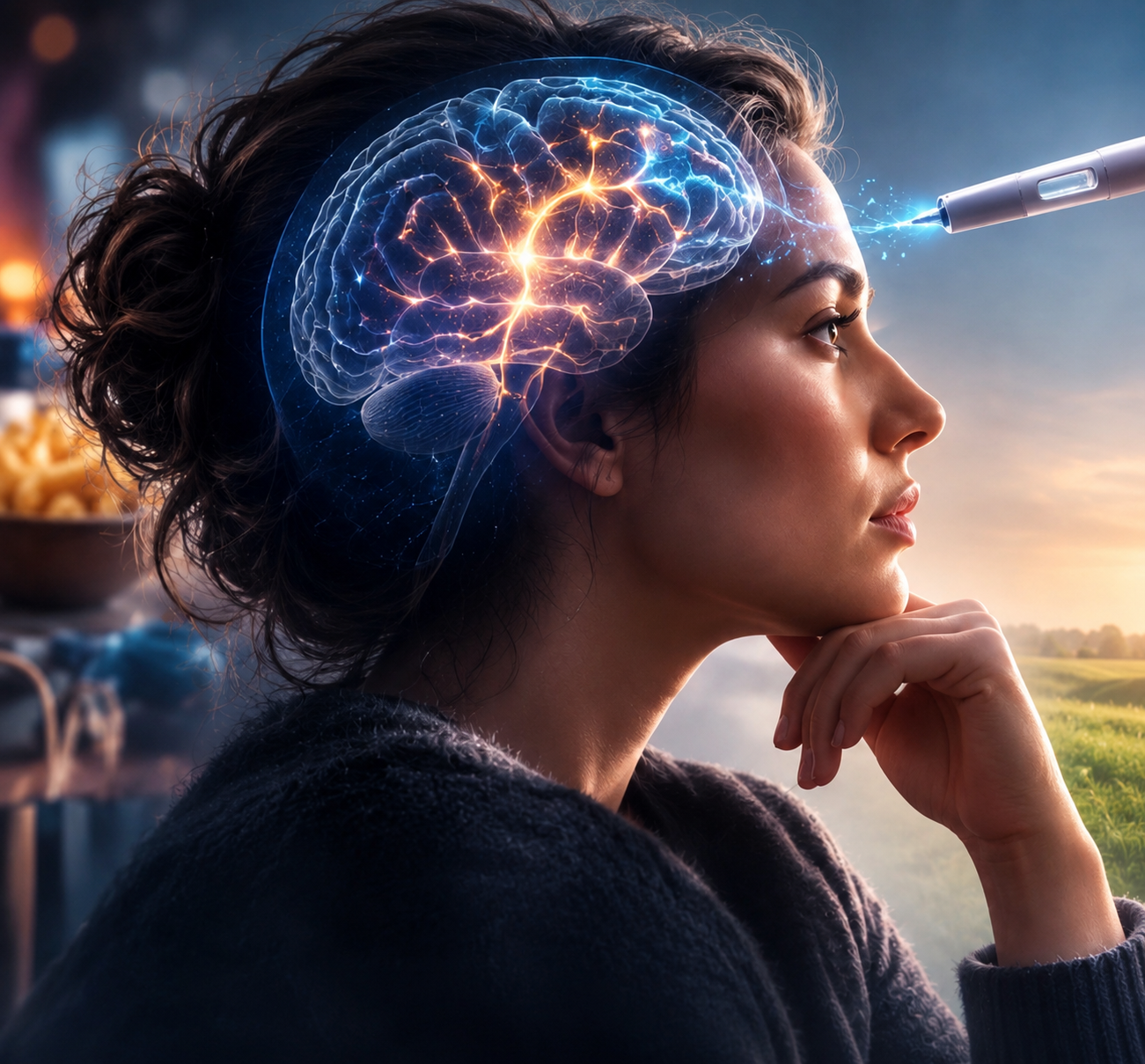
Güney Öztürk’s August 16, 2026 article in Sözcü, titled “The Injections Affect the Brain, Not Just the Stomach,” led me to think most deeply about this question. Öztürk discusses how GLP-1-based weight-loss medications may do more than reduce appetite or help people lose weight; they may also affect the brain’s reward and motivation systems.
The issue here is not simply weight loss.
The issue is desire.
Because, in a sense, human beings are made partly of their desires. We become hungry and want food. We become thirsty and seek water. We become curious and want to learn. We love and seek closeness. We miss someone and wait for them. We believe in things, pursue them, and make plans for the future.
Of course, not all our desires are good. Some lead us down harmful paths, become addictions, or even cause us to hurt ourselves.
But the same capacity for desire can also lead us to read books, make or listen to music, research, create, love, and touch another person’s life. Therefore, reducing desire does not simply mean getting rid of bad habits.
The real challenge is understanding which desires we should overcome and which we should preserve.
First, We Increase Desire,Then We Try to Reduce It
Modern life contains a fascinating contradiction.
On the one hand, we are constantly told to want more:
Consume more.
Earn more.
Look more beautiful.
Look younger.
Be more successful.
Buy a newer phone.
Live in a bigger house.
Own a better car.
Advertising, social media, and consumer culture remind us almost every day of something we supposedly lack. We live with the feeling that what we have is never quite enough and that we always need a little more.
Then the same society tells us something else:
“Don’t overeat.”
“Consume less.”
“Put down your phone.”
“Break your shopping addiction.”
“Control your impulses.”
On one side, there is a system that constantly feeds our desires.
On the other, we develop medications, apps, therapies, and various methods to control those very desires.
First, we increase appetite; then we search for ways to reduce it.
Perhaps this is one of the strange contradictions of our age.
We Should Not Underestimate the Benefits of Medication
There is an important point we should not overlook: it would be wrong to dismiss the medical value of weight-loss medications.
Obesity is a serious health problem. It can reduce quality of life and increase the risk of various diseases. Therefore, the availability of effective treatments for people who genuinely need them is an important medical advance.
We should also remember that some people have spent years being blamed with phrases such as, “Just have more willpower.” Not everyone struggling to lose weight lacks willpower. Some people are dealing with a difficult combination of biological, psychological, and environmental factors.
For such people, a medication that makes that struggle easier can genuinely be life-changing.
But another question must also be asked:
“Does the fact that a medication is medically beneficial mean that every way of using it is necessarily appropriate?”
I don’t think so.
When health becomes mixed with beauty, treatment with aesthetic concerns, and medicine with consumer culture, the issue becomes more complicated. A person may gradually stop accepting their body as it is and begin to see themselves as a project that constantly needs to be “fixed.”
A little thinner...
A little younger...
A little more beautiful...
A little fitter...
A little more controlled...
Eventually, even our relationship with our own bodies can become a performance competition.
Perhaps the Real Question Begins When We Touch the Brain
What concerns me even more is the possible effect of these medications on the brain’s reward and motivation systems.
Because now we are no longer talking only about the stomach or body weight.
We are talking about desire.
A significant part of human behavior is shaped by what we want. Of course, we cannot say that we freely choose everything we desire. Addictions, biological predispositions, past experiences, and the environment in which we live all influence us.
But freedom begins somewhere here.
When we experience an impulse, being able to pause instead of immediately following it...
Being able to ask, “Do I really want this?”
Being able to set a boundary for ourselves...
And sometimes refusing to let a harmful desire control us...
These are important dimensions of being human.
Now technology offers us another possibility:
“Instead of struggling with the impulse, reduce the impulse itself.”
For some people, this may represent enormous freedom.
But it also raises another question:
“When I get rid of one of my desires, have I really become freer—or have I changed a part of my personality?”
There is no easy answer.
Eliminating Every Desire May Not Be a Good Thing
Of course, it is beneficial for someone who wants to smoke to lose that craving. For someone struggling with addiction, reducing an impulse that causes self-harm can be a tremendous gain. And for someone who has suffered for years because of uncontrolled eating, no longer thinking constantly about food may greatly improve their life.
We should not ignore these benefits.
But there is a subtle line here.
Reducing a harmful desire is one thing. Reducing a person’s capacity for pleasure in general is something else.
Because life is not made only of things we need to avoid.
Sometimes we want to truly savor a meal.
We listen to a song over and over.
We cannot put a book down.
We talk with a friend for hours.
We keep watching a child’s laughter.
When we are with someone we love, we lose track of time.
None of these experiences fit neatly into a calculation of “productivity.”
Yet life itself is made, in part, of these things.
Human beings are not merely their weight, blood sugar, work capacity, or physical appearance.
We are also creatures who wonder, long, become excited, rejoice, connect, love, and experience pleasure.
What Should the Medicine of the Future Ask?
For this reason, the medicine of the future should not ask only:
“What disease does this medication treat?”
We should also ask:
“How does this intervention change the way a person relates to themselves, to others, and to life?”
Intervening in the brain carries a different meaning from intervening in other organs.
As someone who underwent major brain surgery in 2013, I had the opportunity to learn a great deal about the brain. I came to understand that the brain is not simply another organ; it is deeply involved in our thoughts, emotions, motivations, and behavior.
Therefore, when we intervene in the functioning of the brain, we need to consider not only biological outcomes but also the person’s lived experience.
At the same time, it would be equally wrong to conclude that “medications are bad.”
The issue is not rejecting medication.
The issue is understanding what exactly we are changing.
Is Wanting Less Really Better?
Perhaps in the future, people will turn to medications not only to lose weight but also to reduce other impulses.
To eat less.
To drink less.
To shop less.
To use their phones less.
To gamble less.
To become less dependent.
At first, this sounds quite appealing.
But then a more difficult question emerges:
“How little desire is enough?”
More importantly:
“Which desire is a disorder, and which desire is part of a person’s identity?”
Laboratories alone cannot answer this question.
Because medicine is not the only field that has something to say here. Psychology, philosophy, ethics, and society all have a role to play.
Perhaps the Issue Is Not the Injection, but the Human Being
Putting weight-loss medications at the center of the debate may actually make the issue too narrow.
We are part of a much larger transformation.
First, humans changed nature.
Then we began changing our bodies.
Now we are increasingly able to intervene in the workings of our own minds.
This is a remarkable power that science has given us.
But as power increases, so does responsibility.
Technology can answer the question:
“Can we do this?”
But it cannot, by itself, answer:
“Should we do this?”
That is where the real debate begins.
An injection can affect the stomach. It can affect the brain, too.
But what we should really think about is how such interventions may change our relationship with our own desires.
Because human beings are not defined merely by their weight, blood sugar, or body measurements.
We are also defined by what we love, what we are curious about, what we pursue, and what we choose to live for.
Perhaps, then, the most important question we will face in the future is this:
Do we want to learn how to manage our desires, or do we want to eliminate our desires?
These are not the same thing.
Perhaps the real issue is not wanting less.
Perhaps the real challenge is learning what is worth wanting.