
THERE MUST BE A PONY SOMEWHERE
Over the years, I have come to realize that the same event can mean very different things to different people. One person loses hope at the first obstacle, while another pauses and looks for a different way forward. Even when the circumstances are the same, our perspectives can be very different.
There was once a father with two sons. He was troubled by the fact that one was extremely pessimistic while the other was unreasonably optimistic. The pessimistic boy could find fault even with the best things, while the optimistic one looked for something to hope for even in the worst circumstances.
Eventually, the father consulted a child psychiatrist. The psychiatrist came up with an unusual suggestion: They would fill the pessimistic boy’s room with the most wonderful toys imaginable and put the other boy in a room filled with horse manure.
The next day, the pessimistic boy entered the room full of toys. An hour later, the psychiatrist found him crying in a corner.
“Why are you crying? Don’t you like the toys?” he asked.
The boy replied, “I do, but I might break one while playing with it. If I don’t play with them, someone might come and take them away. Besides, I’ll get bored with them eventually.”
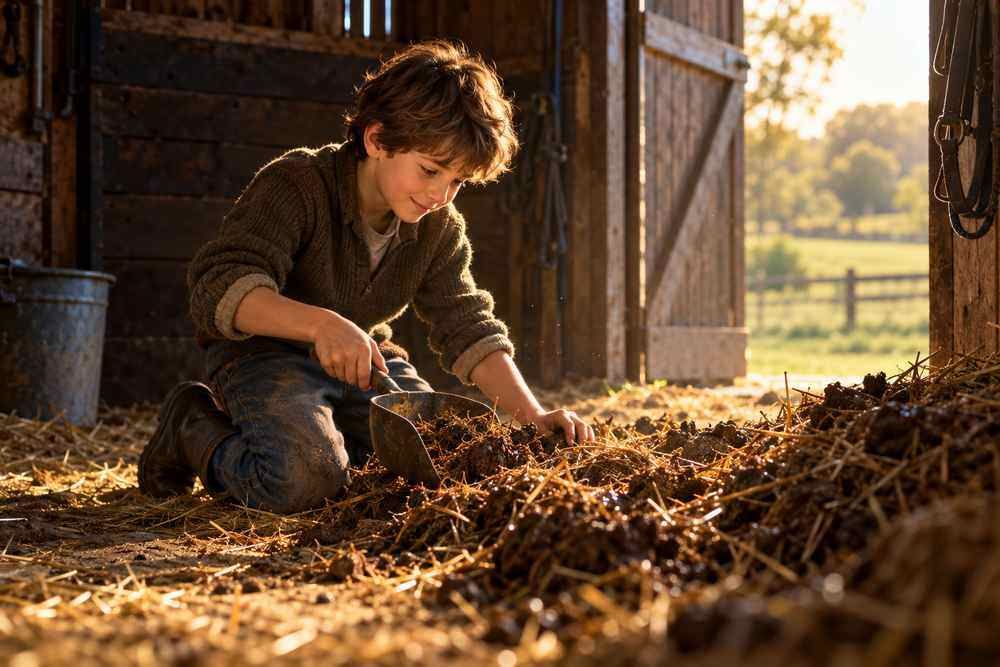
The psychiatrist went to the other boy’s room. When he opened the door, he found the boy happily digging through the pile of horse manure.
“What are you doing in here?” he asked.
The boy looked up with a smile and said:
“With all this horse manure, there must be a pony somewhere!”
This story makes me think about why people respond so differently to the same circumstances. One person cannot enjoy the good things in front of them, while another looks for a possibility even in a situation that appears entirely negative.
Of course, not every bad experience leads to something good. We cannot bring back someone we have lost or recover a missed opportunity simply by thinking positively. Ignoring reality is not optimism; it is self-deception.
But realism and pessimism are not the same thing. A realistic person sees the obstacle ahead but does not immediately conclude that every path is closed. Optimism does not mean believing that everything will turn out well. It means remembering that the outcome is not yet certain.
Throughout my academic career, I often encountered examples of these two different approaches. When a problem arose, some people immediately began explaining why it could not be solved. Others would ask, “All right, what can we do?” The first approach often kept people stuck where they were, while the second encouraged them to look for new solutions.
We encounter similar situations in everyday life. We receive a rejection, fail at something we have worked hard to accomplish, or experience unexpected behavior from someone we trusted. It is natural to feel disappointed, angry, or even hopeless for a while. What matters is not allowing ourselves to remain trapped in those feelings indefinitely.
At such times, we can ask ourselves two questions: “Why did this happen to me?” and “What can I do now?” The first may keep us focused on what has already happened; the second directs our attention toward the things we can still change.
As we grow older, we begin to understand more clearly that life does not always unfold as we wish. Sometimes, despite all our efforts, we fail to reach our goals. At other times, we have to accept circumstances we cannot change. But just because something has not turned out as we hoped does not mean there is nothing left to do. Sometimes we need to change our approach, sometimes ask for help, and sometimes find another way forward.
To me, hope is not a guarantee that everything will be all right. It is the willingness to accept that, whatever the circumstances, there may still be a possibility we have not yet explored. Of course, not every pile of manure contains a pony. But if we focus only on what looks bad, we may overlook other possibilities.
When life presents us with unexpected difficulties, we should face reality honestly and ask ourselves: “Is there still something I can do, despite all this?”
Sometimes, starting over does not require a great achievement. We simply need to recognize that another possibility may exist.
Perhaps the pony we are looking for is not there. But unless we try looking, we cannot be sure there is nothing to find.