
THE DONKEY’S STORY, THE RETIREE’S REALITY
Throughout life, people accumulate far more than money. They also gather habits, expectations, and life’s small pleasures. The amount of cheese on the breakfast table, a modest toy for a grandchild, or the quiet satisfaction of returning home from the market with full shopping bags are not merely patterns of consumption. They are the silent yet indispensable pieces of a life built over many years.
But when economic conditions deteriorate, it is not only our income that changes. Our way of living changes with it. As wages rise slowly while prices climb relentlessly, people begin to reduce not only their spending but also the habits that once defined everyday life. For retirees especially, this gradual scaling back is no longer a temporary adjustment. It has become the reality of daily existence.
There was a time when we went to the market asking ourselves, “What shall I buy today?” Now the question has become, “What can I afford to leave behind?”
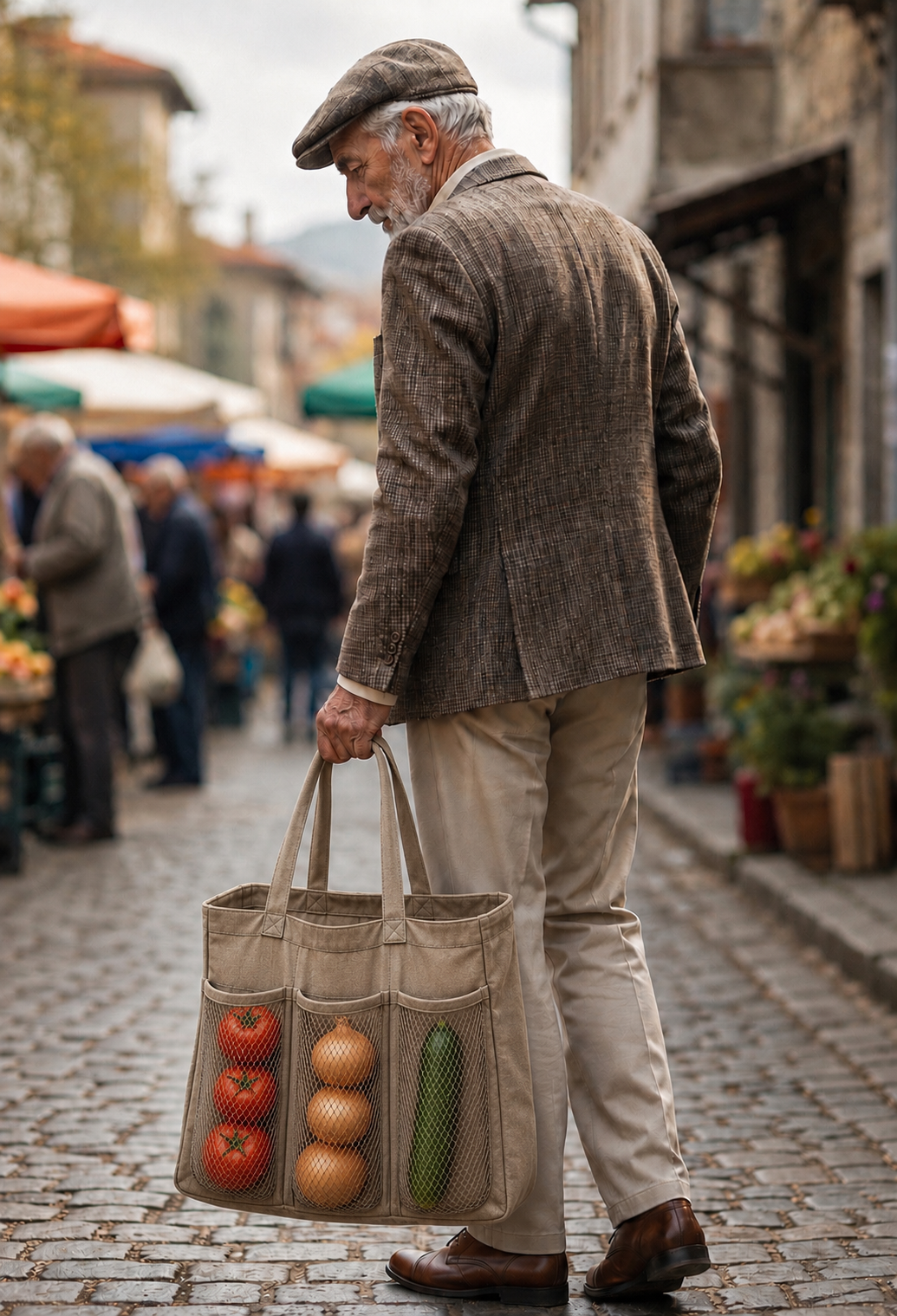
Yesterday, while walking through the Thursday Market, I witnessed this reality more clearly than ever. Most of the people standing before the stalls were around my age, most likely retirees. Some bought half a kilogram of tomatoes, two cucumbers, and a few green peppers. Even dry onions, now costing 70 Turkish lira per kilogram, were no longer purchased by weight but one or two at a time.
There was a time when vendors would cheerfully ask, “Shall I add another kilo?” Today, customers hesitate and quietly reply, “Could you please take one back?”
At that moment, I realized that advice we had heard for years had quietly become an unavoidable reality.
“Reduce your portions.”
We have.
“Eat less meat.”
We do.
“Consume less.”
Whether we want to or not, many of us no longer have a choice.
Avoiding waste is certainly a virtue, and mindful consumption is always admirable. But choosing a simpler life of one’s own free will is fundamentally different from being forced by economic hardship to cut back on basic necessities. Frugality is a choice. Deprivation is not.
On my way home from the market, an old story about Nasreddin Hodja came to mind.
One day, the price of hay increased, and the Hodja began calculating his expenses.
“This can’t go on,” he muttered.
He decided the solution was to feed his donkey less hay. Instead of giving it a full bale each day, he reduced the ration to half.
Days passed. The donkey carried the same loads without complaint.
Encouraged, the Hodja thought,
“Apparently I’ve been feeding him far more than necessary.”
So he cut the ration in half again.
The donkey continued working.
Seeing no immediate consequences, the Hodja kept reducing the amount day after day while the donkey patiently carried its burden.
Then one morning, he entered the stable and found the donkey lying motionless on the ground.
Standing beside it in sorrow, he sighed,
“Oh, if only you had held on a little longer. I was just about to teach you how to work on an empty stomach.”
At first glance, the story makes us smile. Yet beneath its humor lies a painful truth.
Every living creature, every human being, and every society has its limits.
People can remain silent for a long time. They may not complain. They may endure. They may give up familiar comforts, eat less, travel less, give their grandchildren smaller gifts, postpone buying new shoes, or delay visiting the doctor.
From the outside, life may appear perfectly normal.
But silence should never be mistaken for limitless endurance.
A life that demands constant sacrifice eventually ceases to be truly lived. It becomes something merely endured.
The true strength of a society is measured not by how little its people can survive on, but by its ability to preserve the conditions that allow them to live with dignity.
The purpose of economic policy should never be to teach people how to consume less and less. Its purpose should be to create a society in which workers and retirees alike can meet their basic needs and look toward the future with confidence.
Buying a single tomato, two cucumbers, or a handful of onions is not merely an economic decision. It is also a quiet social indicator. Inflation can be measured in statistics, and purchasing power can be illustrated with graphs. Yet the true story of the rising cost of living is often told by the shopping bag of a retiree who no longer returns home with what they once could.
Perhaps it is time to ask ourselves once again:
Is the success of a society measured by how well it teaches its people to live with less, or by its ability to ensure that those who have worked all their lives can spend their retirement with dignity?
For the true wealth of a nation is measured not only by rising economic indicators, but also by what a retiree can still afford to place in their shopping bag on the way home from the market..