
CHANGING NOT THE WORLD, BUT THE PLACE FROM WHICH WE SEE IT
We do not always see the world as it really is. Sometimes, the world we see reflects what is happening inside us that day. When we are angry, people seem ruder, traffic feels more unbearable, and even ordinary conversations become irritating. The smallest inconvenience can seem much bigger than it really is. Then, by the end of the day, we find ourselves thinking:
“Why was everyone like that today?”
Perhaps everyone was not like that. Perhaps we were simply looking at everything a little more harshly that day.
Anger changes not only our emotions but also our attention. When we are upset, flaws catch our eye more easily while the good things fade into the background. Someone may have treated us kindly all day, listened to us, and helped us. But if that person says one thing that hurts or bothers us, we may carry those words in our minds for hours. We forget the good parts of the day and remain stuck on the one moment that upset us.
Everyday life is full of examples. We leave home in a bad mood. Someone cuts us off in traffic, the roads become congested, and an unexpected problem comes up at work. By evening, we put all these things together and say:
“Nothing went right today.”
But perhaps the whole day was not really like that. Perhaps a few unpleasant moments simply overshadowed everything else. Because more often than we realize, we look at the world through the mood we are in.
There is a beautiful wisdom story that I have shared before in one of my writings.
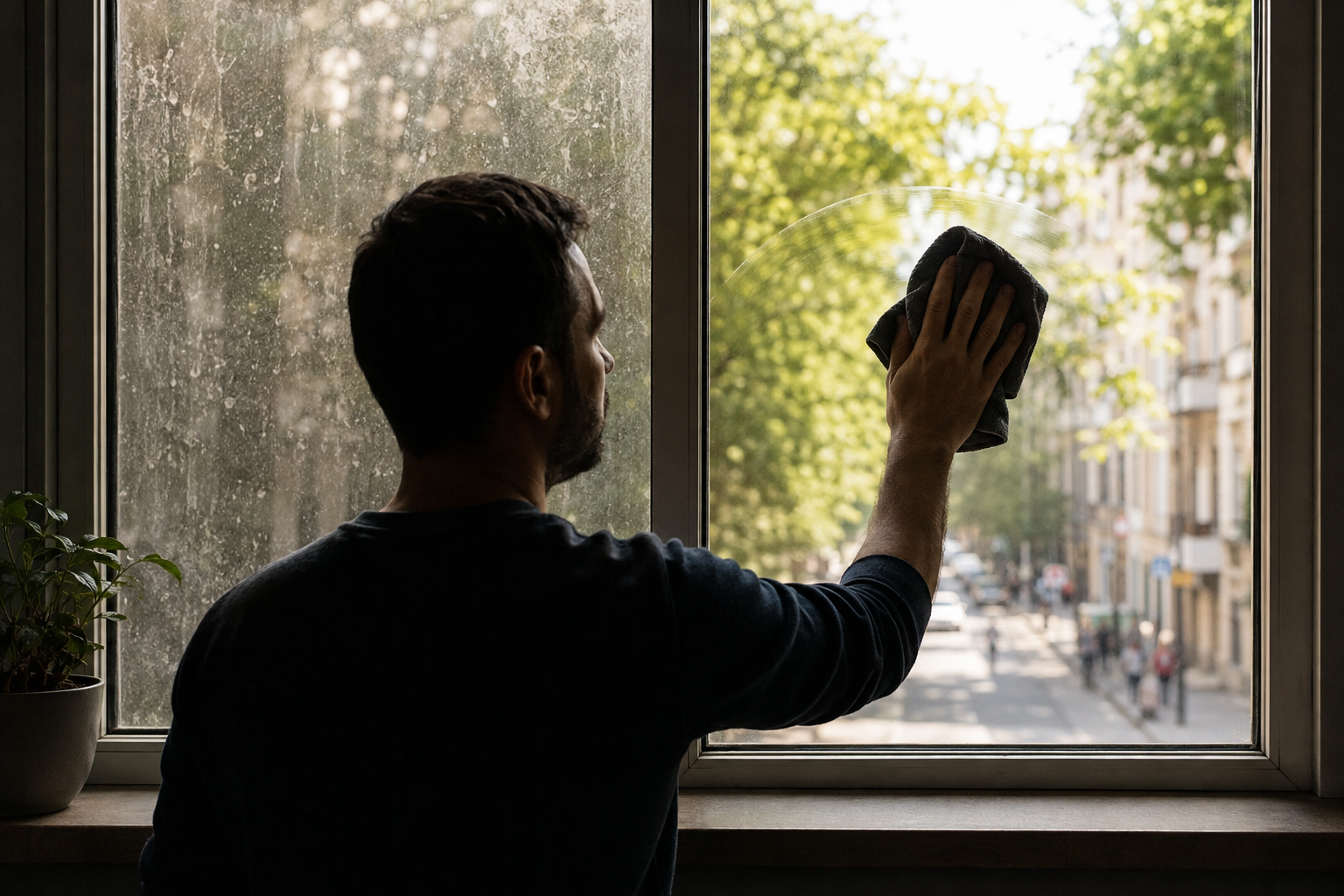
An old wise man had been observing a man who lived on the same street for a long time. Every morning, the man would open his window, look outside, and begin complaining:
“Just look at this street… People have no respect anymore. The children are so noisy. Nobody thinks about anyone but themselves.”
Wherever he looked, he found something wrong.
One day, the wise man asked him:
“How long has it been since you cleaned your window?”
The man was puzzled.
“What does that have to do with anything?”
The wise man pointed to the window.
“Perhaps the world outside is not as dirty as you think.”
The man cleaned his window that day. The next morning, he stood at the same window again.
The street had not changed. The same houses, the same sidewalks, the same trees, and the same people were still there.
But this time, he saw different things.
He noticed the flowers growing along the sidewalk. He saw the children playing happily in the street. He noticed an old man putting out food for stray animals. He saw a woman helping her neighbor.
After watching for a while, he said:
“This street is not so bad after all.”
The wise man smiled.
“You did not change the world outside. You simply cleaned the window through which you were looking at it.”
The story is really about something that happens in all of our lives. When we are at peace with ourselves, we begin to notice things in the same life that we had previously overlooked. A friend’s smile, a child’s laughter, the sunlight filtering through the window, the sound of birds as we walk, or a small act of kindness from a complete stranger…
None of these things suddenly appear that day. They were already there.
What changes is whether we are in a state of mind that allows us to see them.
There is, therefore, a strong connection between our inner world and the world around us. When we are troubled inside, the noise of life feels heavier. When we become a little calmer, we find more room to breathe within that same life.
The world has not changed.
Our way of looking at it has.
But saying “Everything is a matter of perspective” should not be an excuse for ignoring the real problems of life. Injustice is still injustice. Cruel behavior is still cruel. Some people really are hurtful, and some circumstances in life are genuinely difficult.
Being calm does not mean closing our eyes to these things.
The real question is how much space we are willing to give what happens outside us inside ourselves.
Someone may have treated us unfairly, but that does not mean we have to give that person our entire day. Carrying someone’s hurtful behavior in our minds for days does not change what happened; it only prolongs its effect on us.
We cannot always control people or life. We cannot change other people’s intentions, and we cannot know what life will put in front of us. But we still have a choice in how we respond to what happens.
Perhaps maturity begins here.
Being able to remain calm when we are hurt, to step back when we are angry, and to resist the urge to respond immediately when we have been wronged is not easy. Yet sometimes the greatest strength lies in choosing our response.
When we calm down, the problems do not disappear. Injustices are not suddenly corrected, and hurtful people do not magically change. But we begin to stand in a different place within the same situation.
Some things that once seemed enormous become smaller. We learn not to take everything personally. We stop allowing another person’s behavior to determine the course of our entire day. And when we stop filling our minds only with the things that hurt us, the beautiful parts of life become visible again.
Over time, we learn something important:
We cannot always change the world. Some people will disappoint us. Some doors will close in our faces. Some circumstances will not unfold the way we want them to.
Yet even within all of this, we have more influence than we think over the state of mind with which we look at the world.
Because our world is not made up only of what happens to us. It is also shaped by the meaning we give to what happens.
Perhaps changing our lives does not always require something dramatic. Sometimes we simply need to pause, calm down, step back, and look at what is happening from another place.
Perhaps, while blaming the outside world for so long, we have forgotten to clean the glass of our own window.
Because sometimes it is not the world that needs to change.
It is the window through which we see the world.